
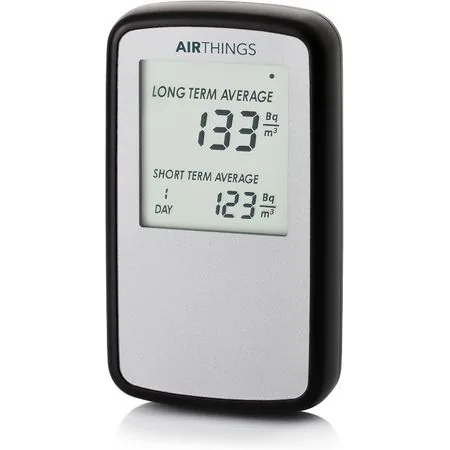
Airthings Corentium Home (Canadian version, Bq/m³)
The simplest one: battery, display, no app.
Battery-powered continuous monitor showing 7-day to 1-year averages in Bq/m³.
View on AmazonAffiliate link
Two families of detectors exist: the passive dosimeter, exposed for at least 91 days, and the electronic monitor, which displays a reading in real time. Both count as a long-term measurement — the monitor under two conditions: C-NRPP-approved, and left in place for 91 days or more.
There are two families of detectors: the passive long-term dosimeter and the continuous electronic monitor. The long-term dosimeter (also called an alpha-track) is the most widespread reference: a small sensor with no battery and no screen. You expose it at home for 91 days or more, then mail it back to a laboratory. The laboratory reports the average concentration in becquerels per cubic meter (Bq/m³). (Health Canada)
The continuous electronic monitor displays the concentration in real time, with its history: the tool for checking that a mitigation is doing its job, or for exploring. Health Canada recognizes both families for the long-term measurement: C-NRPP-approved and left in place for 91 days or more, a monitor counts as a long-term measurement. The models presented below are C-NRPP-approved. Only few-day readings remain indicative: they are no substitute for an average established over time. (C-NRPP)
Some links in this section are affiliate links: if you buy through them, we earn a commission at no extra cost to you. These commissions go solely to keeping this site running (hosting and operations). Our recommendations remain editorial.
C-NRPP-approved and left in place for ≥ 91 days, they count as a long-term measurement too — Health Canada recognizes both device families. Continuous tracking on top; only few-day readings remain indicative.
The simplest one: battery, display, no app.
Battery-powered continuous monitor showing 7-day to 1-year averages in Bq/m³.
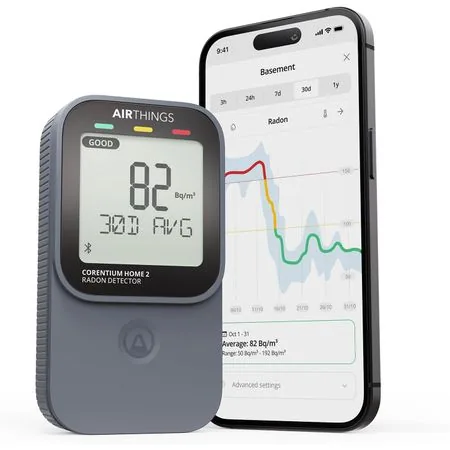
The modernized Corentium, with in-app tracking.
The Corentium's update with Bluetooth and week-over-week variation tracking in the app.
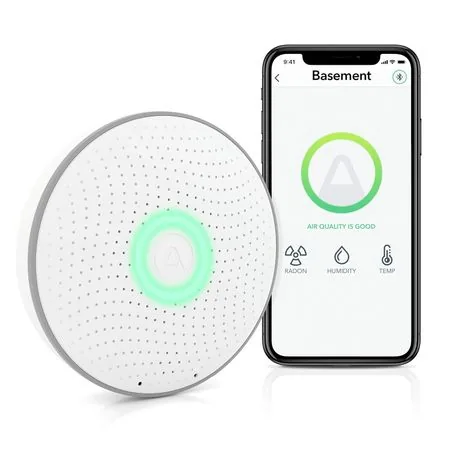
Wall-mounted: read the level with a wave of the hand.
Wall-mounted monitor for day-to-day post-mitigation follow-up, readable without even opening an app.
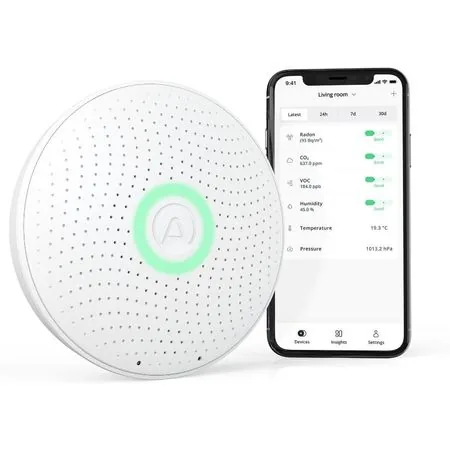
Radon + air quality (CO₂, VOCs, humidity, temperature).
Like the Wave Radon, plus temperature, humidity, CO₂ and airborne chemicals.
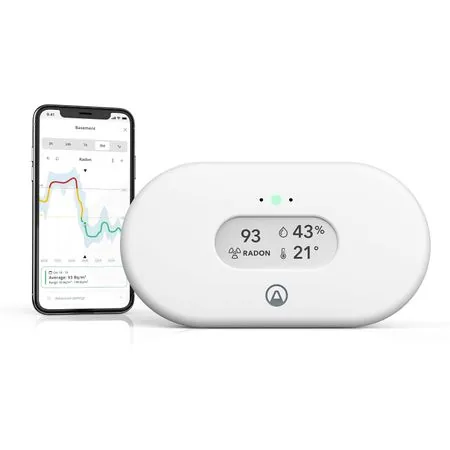
Permanent color display, connected (Wi-Fi).
Wi-Fi monitor with a color display tracking radon continuously — convenient after mitigation.
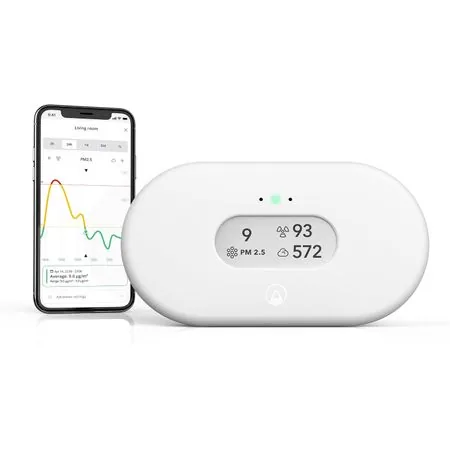
The full station: radon, CO₂, humidity, fine particles.
The most complete monitor (radon, CO₂, humidity, airborne particles) for a full indoor-air picture.
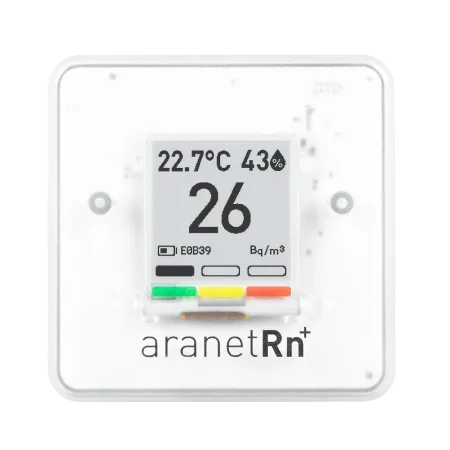
Battery-powered, e-ink display and multi-year battery life.
Compact monitor with an on-device radon display and long-term trends in the Bluetooth app.
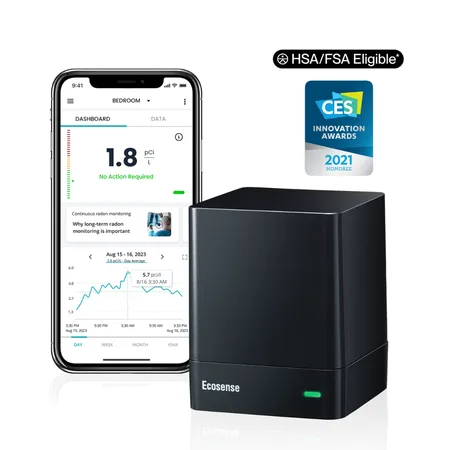
Wi-Fi: remote monitoring and trend charts in the app.
Plug-in monitor that samples radon every ten minutes and lets you follow changes remotely.
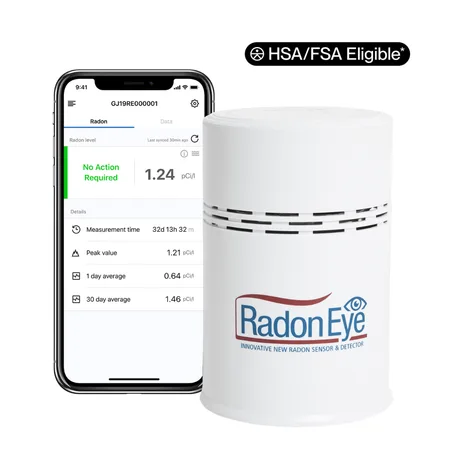
Fast OLED reading, with history in the app.
Plug-in monitor with a fast first reading, local display and Bluetooth trend syncing.
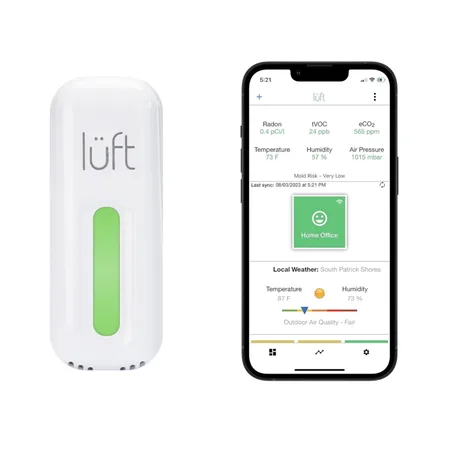
Radon + indoor air quality, connected over Wi-Fi.
Plug-in monitor tracking radon, VOCs, humidity, temperature and pressure in one app.
These kits use a passive detector exposed for at least 91 days, then analyzed by a laboratory. Each card notes whether analysis, outbound shipping and return postage are included; terms vary by seller.
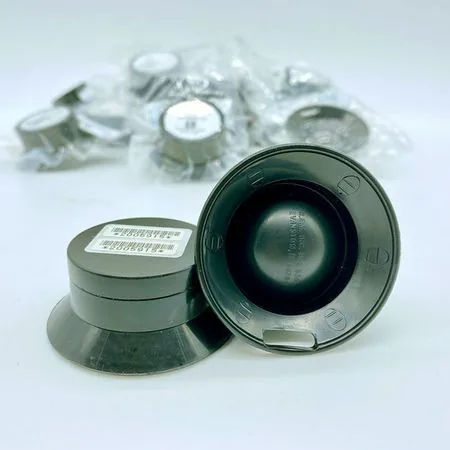
The regulatory measurement, analysis included.
The Quebec association’s kit includes lab analysis, delivery to your home and taxes. Return postage may cost extra. Purchases also support the association’s respiratory-health programs.
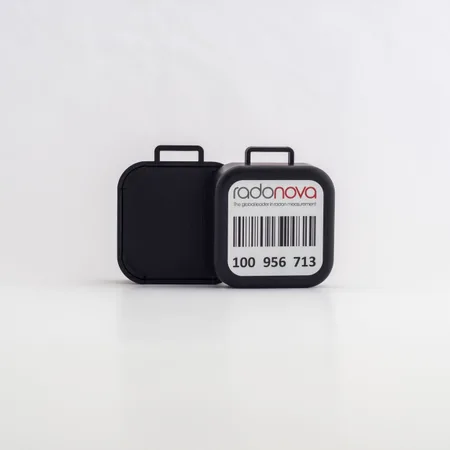
For British Columbia; ships across Canada.
Passive detector for a 90-day to one-year test. Laboratory analysis and shipping both ways are included.
For Alberta and the Northwest Territories.
The regional association offers this Canadian Lung Association long-term test. Lab analysis is included; the return envelope is not prepaid.
For Manitoba; ordering is available across Canada.
A 90-day passive kit with analysis by a Canadian accredited lab, prepaid shipping both ways and online reminders. Purchases support the Lungs Matter program.
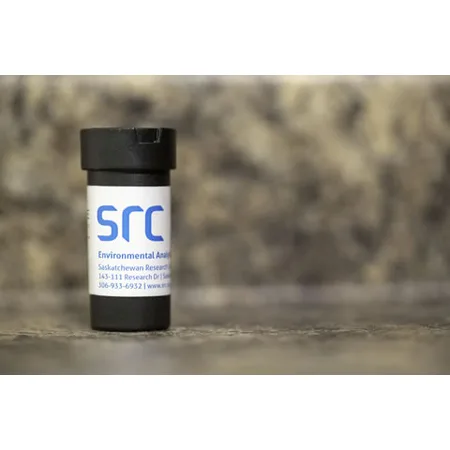
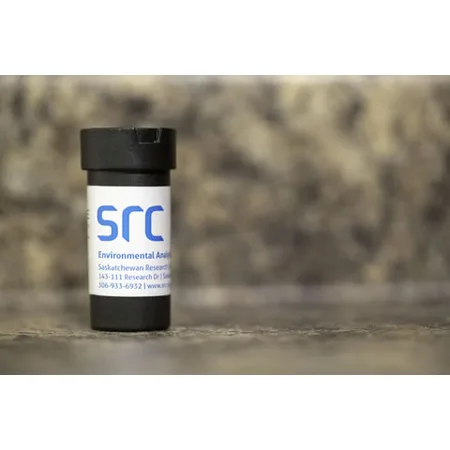
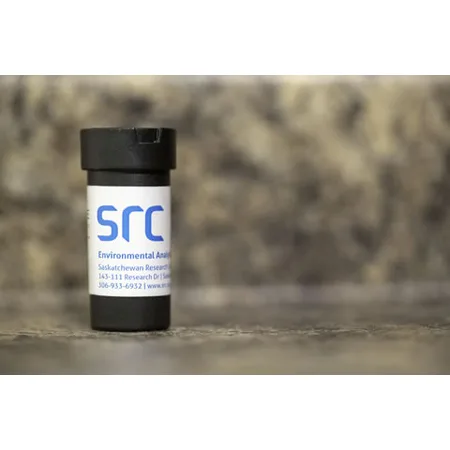
For Saskatchewan; ships across Canada.
A long-term alpha-track kit with shipping both ways and analysis by the Saskatchewan Research Council included.
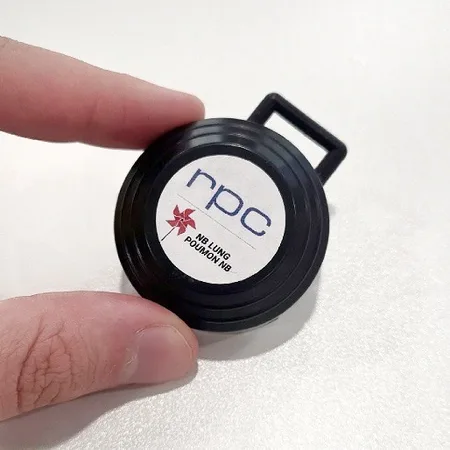
For New Brunswick.
Passive kit with laboratory analysis. Take Action on Radon’s directory lists return postage and lab fees as included; check current terms when ordering.
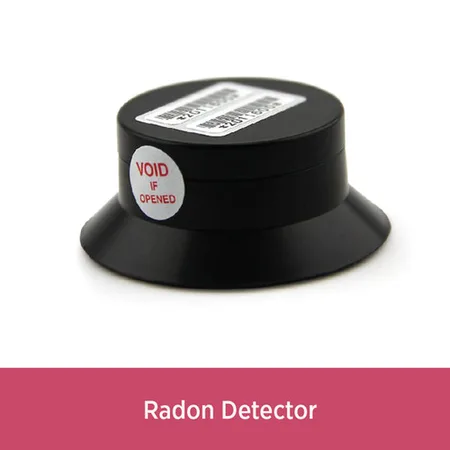
For Nova Scotia and Prince Edward Island.
Laboratory analysis is included. Home delivery costs extra; return postage to the lab is your responsibility.
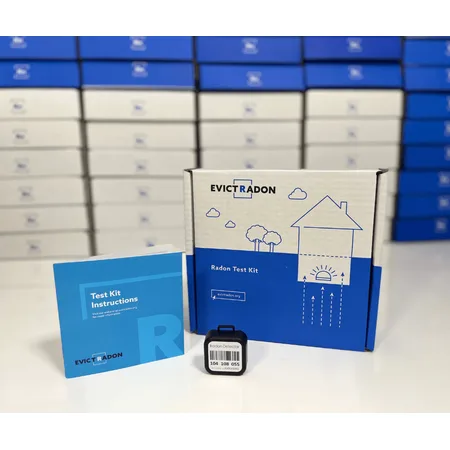
For Ontario; ships across Canada.
At-cost Radtrak3 kit with lab analysis and shipping both ways included. Ordering goes through the Evict Radon National Study and requires study consent; Evict Radon is the seller, recommended by the Lung Health Foundation.
The measurement that counts lasts 91 days or more: the long-term measurement. Radon concentration varies hour by hour and season by season — ventilation, weather, heating, open windows. An honest average therefore takes time. Health Canada recommends ideally 3 to 12 months, preferably during the heating season: the house is closed up, and radon accumulates the most. (Health Canada)
Placing the dosimeter follows simple rules. The lowest room you occupy regularly, at breathing height. Away from drafts, windows, exterior walls and ventilation appliances. Health Canada’s guide details placement for your house’s configuration; follow the instructions that come with your device too. That long-term measurement, reported in Bq/m³, is what the radon map aggregates: sector averages rest on it alone. (Health Canada)
Short-term tests are a glimpse, not a diagnosis. Some devices and services promise a result within days. They render a real service: spotting an obvious problem, comparing two rooms, quickly checking a worry. But they measure the weather of the moment, not the air you breathe through the year. (WHO)
On the map, tests shorter than 91 days are labelled “indicative” and excluded from sector averages: they inform, they do not ground the statistics. A short-term test reporting a high concentration calls for a confirming long-term measurement. A reassuring short-term test does not waive the reference measurement.
It is the laboratory analysis that turns the exposed sensor into a result in Bq/m³: a passive dosimeter says nothing by itself. In Canada, the proficiency of these services is governed by the C-NRPP — the Canadian National Radon Proficiency Program. The C-NRPP maintains the directories of accredited providers and laboratories. (C-NRPP)
Three paths lead to an analyzed measurement. Buying a dosimeter “with analysis included” from a provincial lung association, including the Quebec Lung Association: the result comes back by email or post, depending on the provider. Ordering a detector + analysis kit from an accredited service. Or hiring a certified professional who places, collects and interprets the dosimeter for you. In every case, check that the analysis is performed by an accredited laboratory — the C-NRPP directory is the reference. (C-NRPP)
Finished your test? Add your measurement to the map — anonymously, no account needed. Every submission sharpens the picture of at-risk areas for everyone.
Last verified: 2026-08-28